_edited_ed.png)
Language Learning: How Can We Facilitate the Employability of Newcomers
- il y a 3 jours
- 7 min de lecture




In 2026, LISER reported that only 28% of Applicants for International Protection (AIPs) and Beneficiaries of International Protection (BIPs) find employment during their first year of settlement in Luxembourg. This figure reflects the many obstacles that newcomers face on their path to employment in Luxembourg. Among these obstacles, language skills prove to be particularly challenging. Often a key factor in successful labour market integration, learning French represents a real challenge, upon which newcomers’ ability to fully leverage their skills largely depends. In this article, we will explore the importance employers attach to language proficiency, as well as the limitations of current programmes, before presenting the solutions being proposed.
Language Proficiency: The Criterion That Makes the Difference
Proficiency in the national language most widely used in the local labour market (in Luxembourg, primarily French) stands out as a determining factor. In the United Kingdom, for example, English proficiency among newcomers increases the likelihood of finding employment by approximately 22 percentage points. In Spain, a significant difference in labour market integration has been observed between newcomers from Latin America (predominantly Spanish-speaking) and those from other regions, whose integration pathway tends to be slower.
Finally, a joint survey conducted by the German Chamber of Commerce and Industry (DIHK) and the German Federal Ministry of Labour and Social Affairs highlights the value employers place on German language proficiency. Although this requirement increases with the level of qualification, it remains high even for low-skilled jobs. Indeed, around half of the employers surveyed stated that they required at least a good command of German, including for low-skilled positions. Language skills are essential because they underpin many of employers’ expectations: communication, oral fluency, teamwork, autonomy, and more. As a result, newcomers with valuable skills and qualifications may find themselves hindered in accessing skilled employment and may experience occupational downgrading.
Far from being merely an additional item on a CV, proficiency in French therefore emerges as an important factor in the employability of newcomers, particularly AIPs and BIPs, in Luxembourg.
Challenges Related to Language Programmes
Language skills therefore appear to be the key to the professional integration of newcomers. However, although the language courses offered to AIPs and BIPs have considerable potential, their effectiveness is hindered by several obstacles.
The Number of Hours Required
To achieve a genuine improvement in employability, newcomers should complete between 300 and 800 hours of language training. At a rate of one course per semester, this would represent between two and a half and nine years of study. Yet early access to employment is a key factor in successful integration. Intensive courses can provide an interesting alternative, but they represent only a small proportion of the available offer and are not suitable for all profiles.
The Financial Cost
While awaiting a decision on their application, AIPs have the opportunity to participate free of charge in literacy programmes, where necessary, or in French courses offered through the Adult Education Service (SFA). However, these programmes are not intended to serve as a long-term solution, but rather to introduce participants to the language skills necessary for their day-to-day survival. Subsequently, AIPs may benefit from vouchers distributed by the ONA as part of social assistance. These vouchers reduce the cost of many courses to just €10, but their number is limited and does not allow beneficiaries to reach the 300-hour threshold. Given that application processing times can exceed two years in the most extreme cases, and average around one and a half years, this limitation can significantly hinder labour market integration.
Once their application has been approved, BIPs go through a transitional period during which responsibility for their support shifts from the ONA to the ONIS. During this period, they have access to only very limited assistance.
Finally, as BIPs, they may access these vouchers through ADEM or ONIS, under certain conditions and within the framework of a professional project. In the case of the INLL, only one voucher may be used per semester, preventing participants from combining several courses.
Lack of Structure
Associations play a crucial role in language learning. A large share of programmes relies on organisations operating outside the government framework, which fulfil an indispensable role. Without questioning their contribution, it would be beneficial for associations to have access to stable and sustainable funding in order to ensure the continuity and stability of programmes that complement the current offer.
Lack of Certification
While some courses lead to certification, this is not the case for all of them. This lack of certification can be detrimental to beneficiaries who need to demonstrate their language level.
Language proficiency certificates send a positive signal to potential employers. Not only do they provide objective proof of language proficiency, but they also demonstrate the motivation and reliability of a potential employee in the host country. Furthermore, some jobs require an official certification or view language certification as compensation for the absence of local qualifications.
Courses That Are Not Always Well Adapted
While some courses are specifically designed for this target group, others cater to a broader audience and are not adapted to the particular needs of AIPs and BIPs. As a result, they may find themselves attending classes alongside learners whose profiles differ significantly from their own. Yet AIPs and BIPs often face specific challenges linked to their personal journeys: trauma, interrupted schooling, administrative instability, and more. These factors make them learners with distinct needs.
Despite these limitations, language programmes remain promising, particularly if certain improvements are implemented.
The Future of Language Courses
Today, awareness is growing regarding the crucial role that language courses play for newcomers. On the one hand, their mental and physical well-being is at stake, as language proficiency facilitates better integration. On the other hand, the host economy and consequently local stakeholders would also benefit. Not only would more effective integration enable newcomers to contribute through employment and taxation, but immigration also plays a key role in addressing labour shortages in essential sectors across Europe.
To increase the effectiveness of language programmes, Luxembourg could embark on a new phase: evaluation. It is necessary to collect data in order to measure the impact of different programmes and encourage the development of the most effective ones. The German example may serve as a source of inspiration, as its programmes have formed the basis of comparative evaluations that have identified the most successful practices.
Beyond this evaluative effort, Luxembourg can also draw inspiration from Germany in designing language-learning programmes that have demonstrated empirical effectiveness. By adapting programmes to the specific needs of newcomers, implementing mandatory intensive training, and linking language acquisition to labour market integration, the German example convincingly illustrates the decisive importance of programme design in integration policies. The Luxembourgish government had already begun moving in this direction through its 2023–2028 coalition agreement, a promising initiative that could benefit from further development.
In Luxembourg, these proposals are being explored by EFID through the PARLE programme. Designed to meet the needs of REVIS beneficiaries who are third-country nationals, the programme combines language learning with professional integration. The training is intensive and complemented by personalised career coaching, delivered in collaboration with TUC assignment organisations to encourage the inclusion of REVIS beneficiaries. In addition, the programme is the subject of a randomised controlled trial (RCT) aimed at evaluating its effectiveness and producing valuable policy recommendations for the future.
In conclusion, designing a language programme is a complex but highly important undertaking. To ensure its effectiveness, it is useful to draw inspiration from programmes developed abroad, but it remains essential to evaluate and improve national programmes that address the specific realities of the country. At SINGA, we witness first-hand the enthusiasm of members of our newcomer community for practical language workshops in French and Luxembourgish. The majority state that they wish to improve their French in order to enhance their employability.
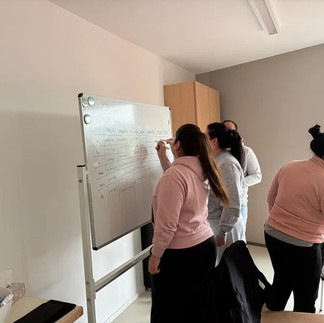
Although these workshops are not language courses in the strict sense, they provide an engaging environment in which participants can practise French regardless of their level. For participants whose daily lives do not always allow them to practise French regularly whether due to limited social integration or because they live in accommodation centres exclusively housing AIPs and therefore often have little contact with French speakers these welcoming workshops provide valuable opportunities to deepen their learning.
This experience confronts us directly with the challenges of language learning, such as differences in learners’ proficiency levels, sometimes complex personal situations, the search for certification, and the lack of regular opportunities to speak French. Nevertheless, it is impossible to overlook the determination and effort demonstrated by participants. The aim is not to provide a theoretical training programme but rather a complementary solution adapted to both the courses already available and the needs of our beneficiaries.
We now hope that the field of language-learning programmes will seize this opportunity and continue to improve, so as to provide an offer capable of meeting the challenges that stand in its way.
References:
Brücker, Herbert, Frédéric Docquier, and Martín Fernández. Refugee Employment Policies in Luxembourg: Evidence, Gaps, and Priorities. 2026.
Dustmann, Christian, and Francesca Fabbri. “Language Proficiency and Labour Market Performance of Immigrants in the UK.” The Economic Journal 113, no. 489 (2003): 695–717. https://doi.org/10.1111/1468-0297.t01-1-00151.
Miyar-Busto, María, Javier Mato Díaz, and Rodolfo Gutiérrez. “Immigrants’ Educational Credentials Leading to Employment Outcomes: The Role Played by Language Skills.” 2019. https://dialnet.unirioja.es/servlet/articulo?codigo=7405622.
Degler, Eva, Thomas Liebig, and Anne-Sophie Senner. Integrating Refugees into the Labour Market – Where Does Germany Stand? Ifo Institute – Leibniz Institute for Economic Research at the University of Munich, 2017. https://ideas.repec.org//a/ces/ifodic/v15y2017i03p06-10.html.
INFPC. Reduced-Rate Training Voucher. lifelong-learning.lu. Accessed May 28, 2026. https://www.lifelong-learning.lu/particuliers/aides-formation-particulier/bon-a-tarif-reduit/fr.
Adult Education Service. October 6, 2022. https://sfadocs.lu/.
Kanas, Agnieszka, and Yuliya Kosyakova. “Greater Local Supply of Language Courses Improves Refugees’ Labour Market Integration.” European Societies 25, no. 1 (2023): 1–36. https://doi.org/10.1080/14616696.2022.2096915.
Bach, Stefan, Herbert Brücker, Peter Haan, Agnese Romiti, Kristina van Deuverden, and Enzo Weber. “Refugee Integration: A Worthwhile Investment.” DIW Economic Bulletin 7, no. 3/4 (2017): 33–43.
Marbach, Moritz, Ehsan Vallizadeh, Niklas Harder, Dominik Hangartner, and Jens Hainmueller. “Does Ad Hoc Language Training Improve the Economic Integration of Refugees? Evidence from Germany’s Response to the Syrian Refugee Crisis.” Journal of the Royal Statistical Society Series A: Statistics in Society 188, no. 4 (2025): 1168–1183. https://doi.org/10.1093/jrsssa/qnae106.
Poisson, Charlotte. Employment Integration of Migrants: Germany, Inspiring Practices – IRFAM. IRFAM, 2024. https://www.irfam.org/insertion-a-lemploi-des-personnes-migrantes-allemagne-les-pratiques-inspirantes/.
The 2023–2028 Coalition Agreement. November 20, 2023. http://gouvernement.lu/fr/actualites/toutes_actualites/articles/2023/11-novembre/20-accord-coalition-2023.html.
EFID. PARLE. Accessed May 28, 2026. https://www.efid.lu/parle.
European Migration Network and OECD. Labour Migration in Times of Labour Shortages: EMN–OECD Joint Study. Directorate-General for Migration and Home Affairs, European Commission, 2025. https://emn.ie/publications/labour-migration-joint-study/.